
Introduction: A Small Certificate That Can Change Your Yoga Career
Imagine this.
You’ve just completed your yoga teacher training. You feel confident, inspired, and ready to teach. But when you start applying for teaching jobs—whether in India or abroad—you keep hearing one question:
“Are you Yoga Alliance certified?”
And suddenly, you pause.
You did complete a course… but does it count globally?
This is exactly where Yoga Alliance certification becomes important.
For many aspiring yoga teachers, this certification is not just a badge—it’s a gateway to global opportunities, credibility, and professional growth. If you’re serious about building a career in yoga, understanding Yoga Alliance certification is essential.
Let’s break it down in simple terms.
What Is Yoga Alliance Certification?
Yoga Alliance is a globally recognized, non-profit organization that sets standards for yoga teacher training programs.
When a yoga school is registered with Yoga Alliance, it means:
- The curriculum meets international teaching standards
- The training hours are structured and verified
- The school follows ethical teaching practices
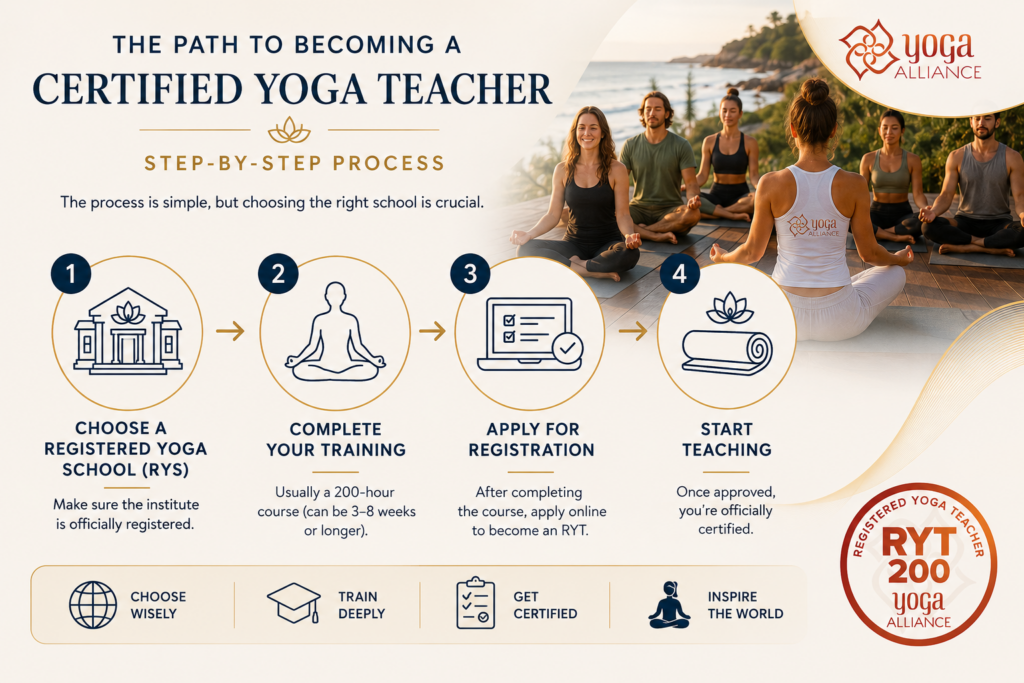
And when you complete your course from such a school, you can register as a certified yoga teacher.
Why Does Yoga Alliance Certification Matter?
Let’s be honest—yoga is no longer just a personal practice. It’s a global profession.
And like any profession, credibility matters.
1. Global Recognition
One of the biggest advantages of Yoga Alliance certification is that it is recognized worldwide.
Whether you want to teach in:
- India
- Europe
- USA
- Bali
- Australia &many others countries
This certification acts like a universal language of trust.
Without it, many studios may hesitate to hire you.
2. Builds Trust With Students
Think from a student’s perspective.
If they see two teachers:
- One with certification
- One without
Who would they trust more?
Certification shows that:
- You’ve completed proper training
- You understand anatomy, alignment, and safety
- You follow professional standards
It reassures students that they are in safe hands.
3. Better Career Opportunities
Many yoga studios, wellness centers, hospitals,Hotels,resorts and retreats require Yoga Alliance certification.
With it, you can:
- Apply for international teaching jobs
- Conduct workshops and retreats
- Teach online with credibility
- Collaborate with wellness brands
Without it, your opportunities may become limited.
4. Structured Learning (Not Just Random Practice)
A Yoga Alliance-certified course is not just about learning poses.
It includes:
- Yoga philosophy
- Anatomy and physiology
- Teaching methodology
- Alignment and adjustments
- Meditation and Pratyahara
- Asna, Pranayama, Mudra, Bandha
- Sat Kriya (Cleansing Practices)
This structured approach transforms you from a practitioner into a professional teacher.
5. Professional Identity
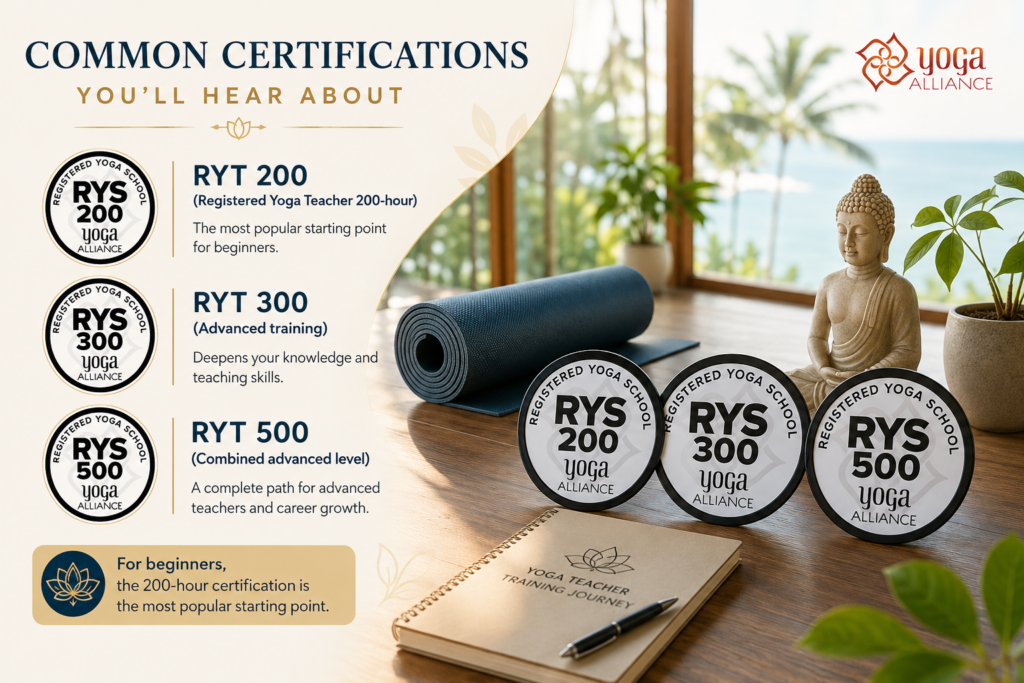
When you register as an RYT (Registered Yoga Teacher), you become part of a global community.
This means:
- You can list yourself as a certified teacher
- You gain professional recognition
- You can network with other teachers worldwide
It gives your career a serious and professional identity.
Is Yoga Alliance Certification Mandatory?
Here’s the truth.
No, it’s not legally mandatory.
You can teach yoga without it.
But…
Without Certification:
- Limited job opportunities
- Less trust from students
- Difficulty teaching internationally
With Certification:
- More credibility
- Higher earning potential
- Global career flexibility
So while it’s not required by law, it is highly recommended for career growth.
How to Get Yoga Alliance Certification?
Why Choose a Certified Yoga School in India?
India is the birthplace of yoga, and learning here has its own magic.
But not all schools are the same.
At institutes like Nirvikalp Yoga Academy, the focus is not just certification—but transformation.
What Makes a Good Yoga School?
- Experienced and qualified teachers
- Authentic yoga philosophy
- Small batch sizes for personal attention
- Practical teaching experience
- International certification standards
Choosing the right academy ensures your certification holds real value.
Real-Life Example: Why Certification Matters
Let’s take a simple story.
Riya and Alex both completed yoga training.
- Riya chose a Yoga Alliance-certified school
- Alex chose a cheaper, non-certified course
After finishing:
- Riya got a job offer in Bali within 2 months
- Alex struggled to get interviews
Why?
Because studios trusted recognized certification.
This happens more often than you think.
Common Myths About Yoga Alliance Certification
Myth 1: “It’s only for advanced teachers”
Truth: Beginners start with 200-hour training.
Myth 2: “It guarantees a job”
Truth: It improves opportunities—but your skills still matter.
Myth 3: “All yoga courses are the same”
Truth: Certified programs follow structured, global standards.
Myth 4: “It’s too expensive”
Truth: Think of it as an investment in your career.
Who Should Consider Yoga Alliance Certification?
This certification is ideal for:
- Aspiring yoga teachers
- Fitness professionals
- Wellness coaches
- Travelers who want to teach abroad
- Anyone serious about yoga as a career
Even if you don’t want to teach immediately, certification keeps doors open.
Key Benefits at a Glance
✔ International recognition
✔ Higher credibility
✔ Better job opportunities
✔ Structured learning
✔ Professional identity
✔ Global mobility
FAQ Section
1. What is Yoga Alliance certification in simple terms?
It’s an internationally recognized standard that confirms you’ve completed a professional yoga teacher training program.
2. Is Yoga Alliance certification valid in India?
Yes. While not mandatory, it is widely respected and adds strong credibility in India and abroad.
3. How long does it take to get certified?
A 200-hour yoga teacher training usually takes:
- 3–4 weeks (intensive course)
- Or a few months (part-time)
4. Can I teach yoga without certification?
Yes, but many studios prefer or require certified teachers. Certification improves your chances significantly.
5. Is Yoga Alliance certification worth it?
If you’re serious about teaching yoga professionally, yes—it’s absolutely worth it.
Conclusion: Is It the Right Step for You?
If yoga is just a hobby, certification may not matter much.
But if you:
- Want to teach professionally
- Dream of working internationally
- Want credibility and recognition
Then Yoga Alliance certification is a smart and powerful step forward.
It’s not just about a certificate.
It’s about:
- Confidence
- Knowledge
- Opportunity
- And building a meaningful career
Ready to Begin Your Journey?
certification
knowledge
experience
expert teachers