
Yoga is often seen as stretching, flexibility, and difficult poses on a mat. But if you’ve ever finished a yoga class feeling calmer, lighter, or more connected to yourself, you’ve already experienced something deeper than exercise.
The truth is, yoga was never meant to be only physical.
The ancient yogis created a complete system for living with balance, peace, and awareness. This system is known as the 8 Limbs of Yoga — a practical guide that helps us improve not just the body, but also the mind and emotions.
For beginners, yoga philosophy can sometimes feel confusing or too spiritual. Words like Samadhi or Pratyahara may sound unfamiliar. But once you understand them in simple language, the 8 limbs become surprisingly relatable to modern life.
Think about it:
- Feeling stressed because of constant notifications
- Struggling to focus
- Feeling emotionally drained
- Looking for more peace and clarity
The 8 Limbs of Yoga were designed to help with exactly these kinds of challenges.
In this guide, we’ll explore each limb in a simple and beginner-friendly way, along with practical examples you can apply in everyday life.
Understanding the 8 Limbs of Yoga
The concept of the 8 Limbs of Yoga comes from the Yoga Sutras of Patanjali, written by the sage Patanjali thousands of years ago.
In Sanskrit, “Ashtanga” means:
- Ashta = Eight
- Anga = Limbs or branches
These eight limbs work together like steps on a path. They are not strict rules. Instead, they help guide us toward a healthier and more meaningful life.
Let’s understand each limb one by one.
1. Yama – How We Treat Others
The first limb focuses on ethics and relationships.
Imagine you start your morning with anger, gossip, or dishonesty. Even if you meditate later, your mind may still feel disturbed. That’s why yoga begins with how we behave toward others.
The five Yamas are:
Ahimsa – Non-Violence
Ahimsa means avoiding harm through actions, words, and thoughts.
This doesn’t only mean physical violence. It also includes:
- Speaking kindly
- Avoiding harsh self-criticism
- Being compassionate
For example, many people are harder on themselves than anyone else. Practicing Ahimsa can simply mean replacing “I’m not good enough” with kinder self-talk.
Satya – Truthfulness
Satya means honesty.
This includes being truthful with others and also with yourself.
Example:
If you constantly ignore stress and pretend everything is fine, you disconnect from your real feelings. Satya encourages authenticity.
Asteya – Non-Stealing
Asteya means not taking what isn’t yours.
This can include:
- Time
- Credit
- Energy
- Ideas
Even arriving very late repeatedly can be seen as stealing someone’s time.
Brahmacharya – Balance of Energy
Traditionally, this referred to celibacy. Today, it’s commonly understood as using your energy wisely.
Instead of exhausting yourself through overwork, distractions, or unhealthy habits, Brahmacharya teaches moderation.
Aparigraha – Non-Attachment
Aparigraha means letting go of greed and over-attachment.
Modern life constantly encourages “more”:
- More shopping
- More comparison
- More validation
This limb reminds us that peace doesn’t come from collecting more things.
2. Niyama – How We Care for Ourselves
If Yama is about the outer world, Niyama is about your inner world.
These practices help build self-awareness and discipline.
Saucha – Cleanliness
Saucha means purity and cleanliness.
This includes:
- Keeping your surroundings clean
- Eating nourishing food
- Clearing mental clutter
A clean environment often creates a calmer mind.
Santosha – Contentment
Santosha means being grateful for what you already have.
This doesn’t mean giving up ambition. It simply means learning not to depend completely on external achievements for happiness.
A person with Santosha can enjoy growth without constant dissatisfaction.
Tapas – Discipline
Tapas is the inner fire that keeps you committed.
For example:
- Waking up early for practice
- Staying consistent with meditation
- Building healthy habits
Real transformation usually comes through small daily efforts.
Svadhyaya – Self-Study
This means observing yourself honestly.
You begin noticing:
- Your reactions
- Your habits
- Your emotional patterns
Journaling, reading spiritual texts, or reflecting after meditation are all forms of self-study.
Ishvara Pranidhana – Surrender
This limb teaches trust.
Sometimes we try to control everything in life and become exhausted. Ishvara Pranidhana reminds us to do our best while accepting that not everything is in our hands.
3. Asana – The Physical Practice of Yoga
This is the limb most people know today.
Asana refers to yoga postures designed to prepare the body for meditation and long periods of sitting.
Popular yoga poses include:
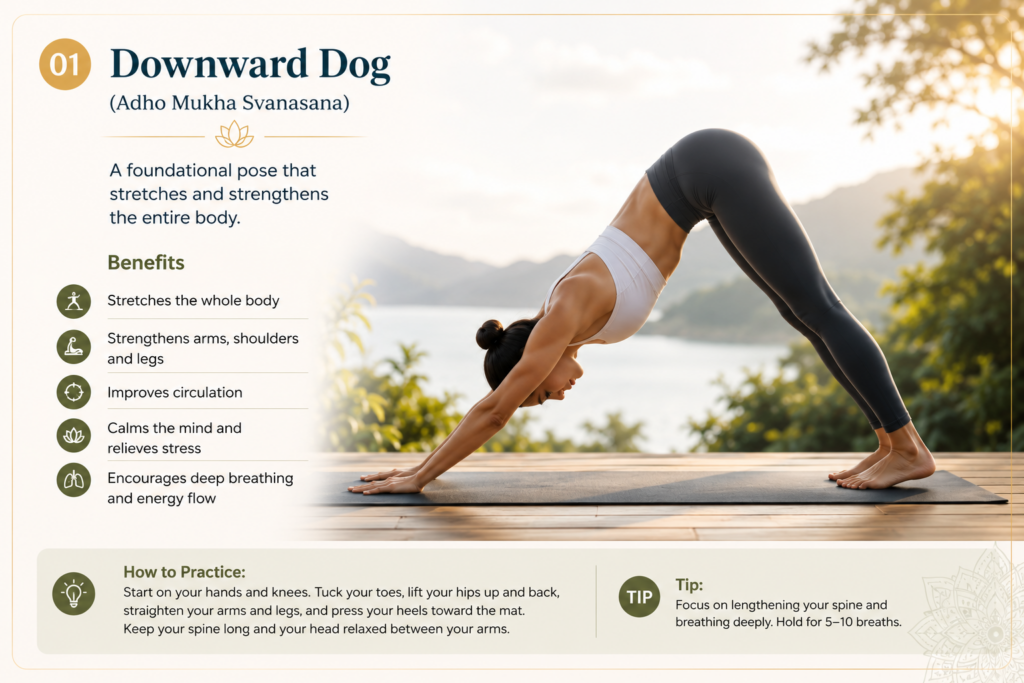
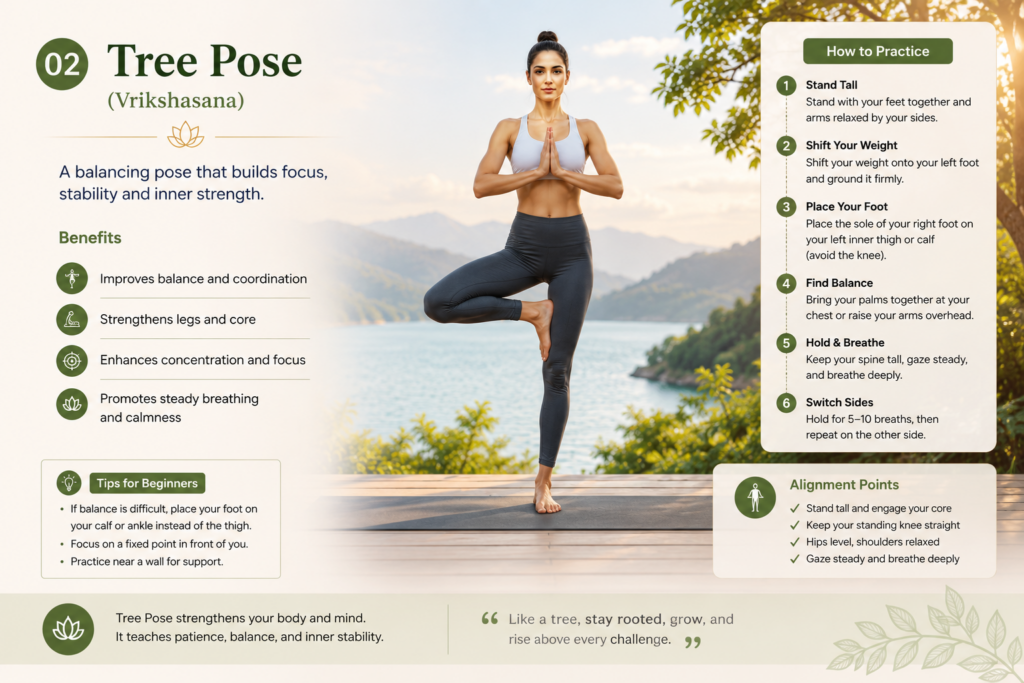
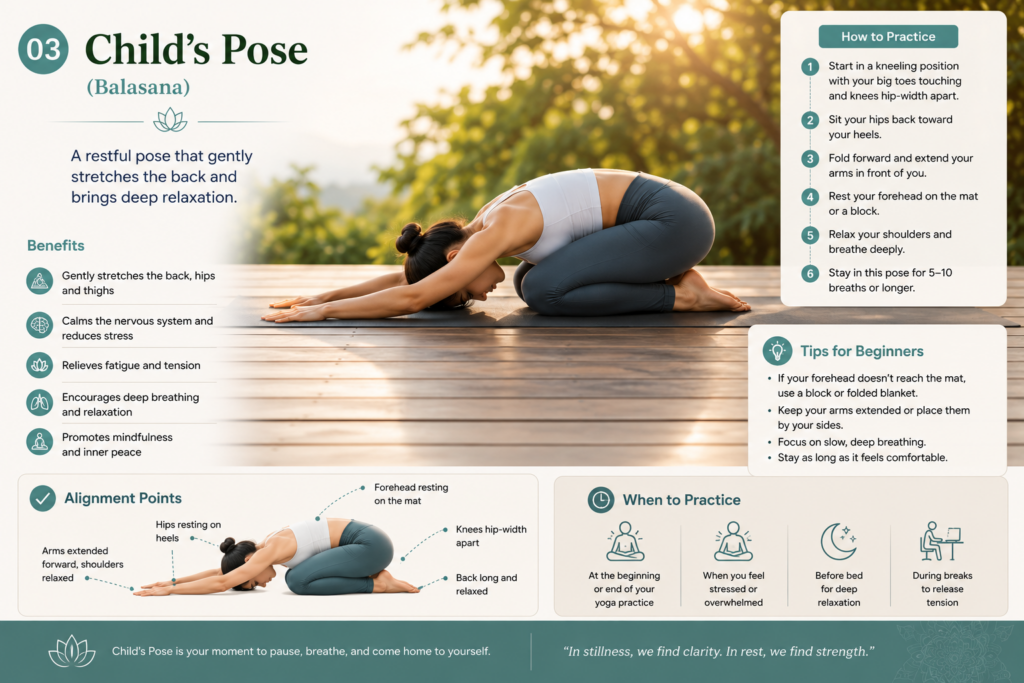
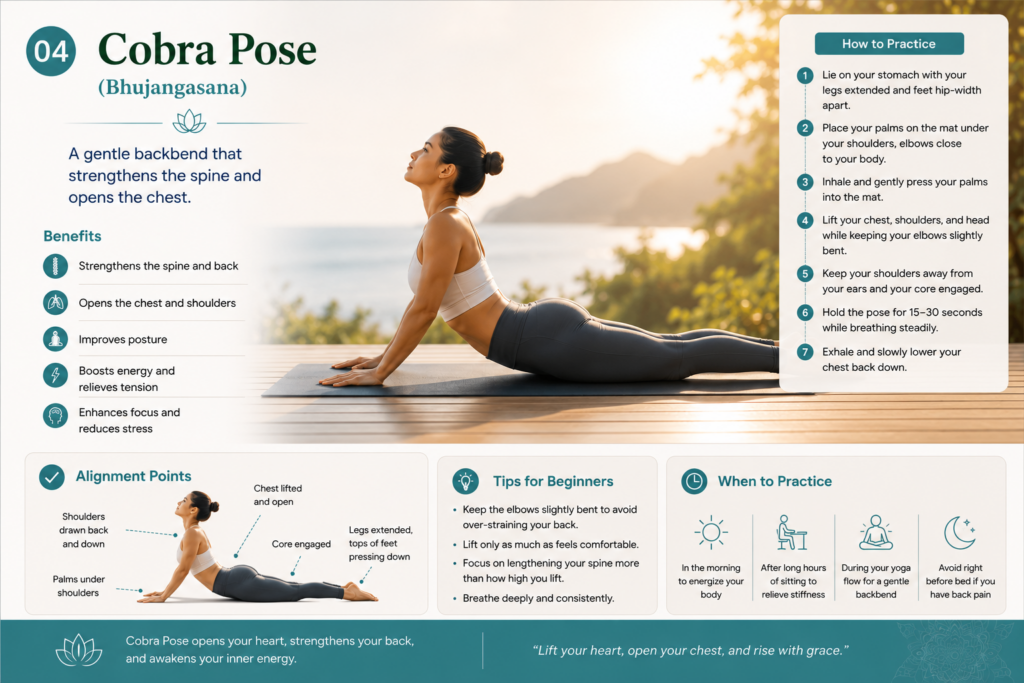
Today, yoga classes often focus heavily on flexibility and fitness. But traditionally, Asana was only one part of the yogic path.
The real goal was to create:
- Stability
- Comfort
- Body awareness
- Mental focus
A simple yoga session can teach patience, balance, and mindfulness far beyond the mat.
4. Pranayama – The Power of Breath
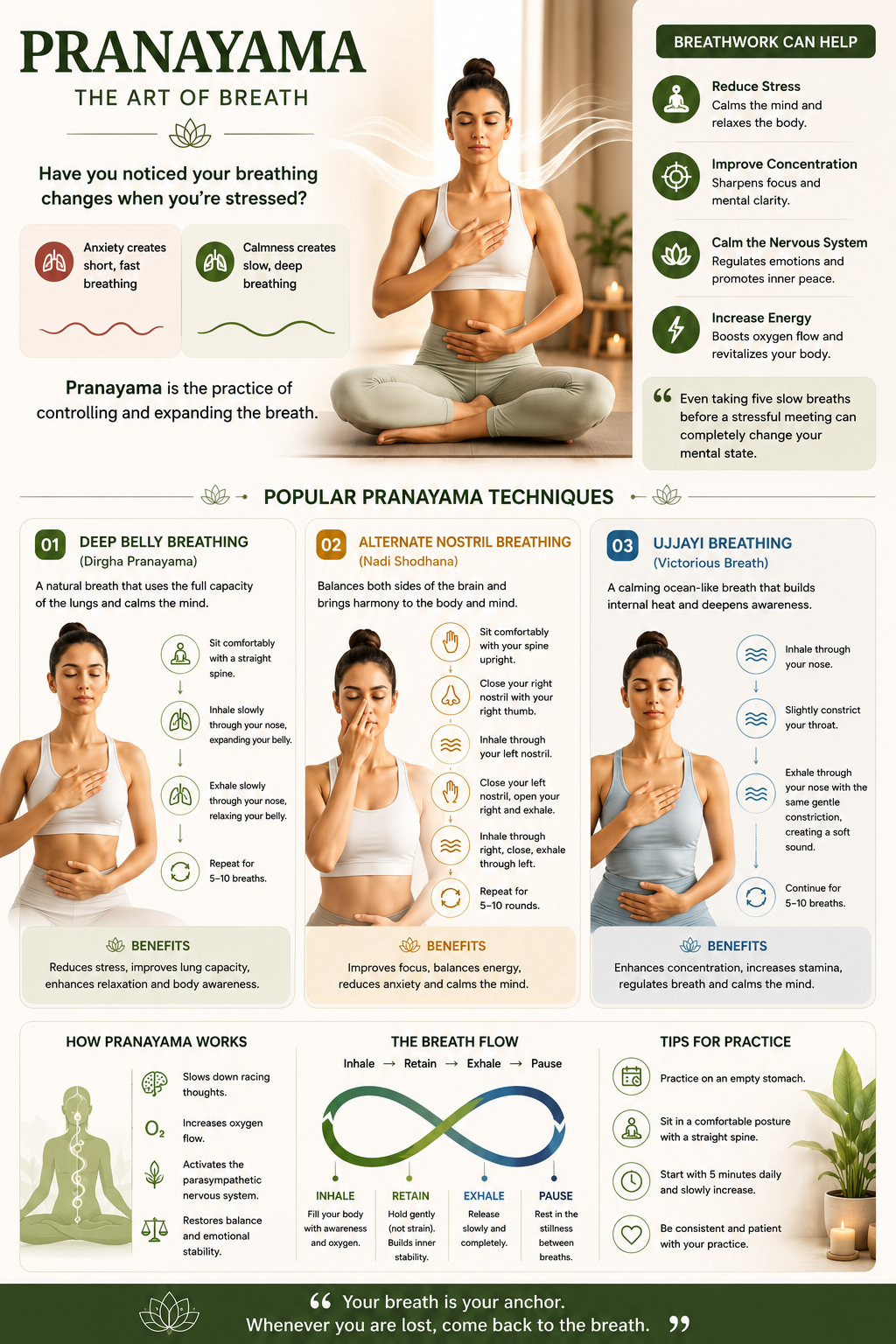
5. Pratyahara – Turning Inward means withdrawal of senses
We live in a world full of distractions:
- Social media
- Notifications
- Noise
- Endless scrolling
Pratyahara means withdrawing attention from constant external stimulation.
Think of it as giving your mind a break.
There are four types practices in Pratyahara are as follows:
- Yognidra
- Ajapa Japa
- Antar Mouna
- Tratka
Simple examples include:
- Sitting quietly without your phone
- Spending time in nature
- Closing your eyes during meditation
- Reducing screen time before sleep
This limb helps create mental clarity and emotional balance.
6. Dharana – Focus and Concentration
Dharana means intensity of concentration of mind
This sounds simple, but in reality, many of us struggle to stay focused for even a few minutes.
In yoga practice, concentration may involve:
Dharna Included three types of practices.
1. External Dharana
A. Bhoochari Mudra
B. Aakasi Mudra
2. Intermediate Dharana
A. Chidakas Dharana
B. Hridyakas Dharana
C. Dahrakas Dharana
D. Viyom Panchak Dharana
3. Internal Dharana
A. Blue Light
B. Naad Internal Sound
C. Shushumna Darshan
Dharana strengthens mental discipline.
It’s similar to training a muscle — the more you practice focus, the stronger it becomes.
7. Dhyana – Meditation
When concentration becomes steady and continuous, it turns into meditation.
This is Dhyana.
Instead of forcing focus, awareness begins to flow naturally deeper & deeper.
Many people think meditation means “stopping thoughts completely.” But meditation is more about observing thoughts without becoming trapped in them.
There are three types of Dhyan :
- Pratyahara Dhyan
- Dharana Dhyan
- Dhyan
- Bhrahma Dhyana
- Trimurti Dhyana
- Pranav Dhyana
- Svishsesh Dhyana
- Nirvishsesh Dhyana
- Svichiar Dhyana
- Nirvishsesh Dhyana
Benefits of meditation may include:
- Emotional calmness
- Better sleep
- Improved awareness
- Reduced stress
- Greater clarity
Even 10 minutes of daily meditation can create noticeable changes over time.
8. Samadhi – A State of Deep Connection
Samadhi is the final limb of yoga.
Samadhi means End/Conclusion
It is often described as a state of complete peace, awareness, and unity.
This concept can sound very spiritual or mysterious, especially for beginners. But even simple moments can give us a glimpse of it.
For example:
- Feeling fully present in nature
- Becoming deeply absorbed in music
- Experiencing complete stillness during meditation
There are thirteen types of samadhi starts from nidra end to Maha-Samadhi.
In Samadhi, the constant mental chatter becomes quiet, and a person experiences a sense of connection beyond the ego.
Why Are the 8 Limbs of Yoga Important Today?
Although these teachings are ancient, they are incredibly relevant in modern life.
The 8 Limbs of Yoga help us deal with:
- Stress
- Anxiety
- Emotional imbalance
- Lack of focus
- Burnout
- Constant distractions
They remind us that yoga is not only about touching your toes — it’s about understanding yourself better.
The beauty of yoga philosophy is that it can be practiced by anyone, regardless of age, culture, or experience level.
How Beginners Can Start Practicing the 8 Limbs
You do not need to master all eight limbs immediately.
Start small.
Here are simple beginner-friendly practices:
Daily Habits You Can Try
- Practice kindness in conversations
- Spend 5 minutes breathing deeply
- Try one short meditation daily
- Reduce unnecessary screen time
- Practice gratitude before sleeping
- Attend a yoga class regularly
Yoga philosophy becomes meaningful when applied in everyday life.
Common Misconceptions About the 8 Limbs of Yoga
“Yoga is only physical exercise”
This is the biggest misunderstanding. Physical poses are only one limb out of eight.
“You need to be spiritual to practice yoga philosophy”
Not at all. The 8 limbs are practical tools for mental and emotional well-being.
“You must practice perfectly”
Yoga is not about perfection. It’s about awareness and consistent effort.
Frequently Asked Questions About the 8 Limbs of Yoga
- Who created the 8 Limbs of Yoga?
The 8 Limbs of Yoga were described by Patanjali in the Yoga Sutras of Patanjali.
- Are the 8 Limbs of Yoga religious?
No. They are philosophical and practical guidelines for living with greater awareness and balance.
- Which limb of yoga is most important?
All eight limbs are interconnected. However, many beginners start with Asana (physical postures) and Pranayama (breathing practices).
- Can beginners practice yoga philosophy?
Yes. The 8 limbs are beginner-friendly when explained simply and practiced gradually.
- How long does it take to understand the 8 limbs?
Yoga philosophy is a lifelong journey. Even small daily practices can create positive changes over time.
- Is meditation part of the 8 Limbs of Yoga?
Yes. Meditation is the seventh limb, called Dhyana.
Final Thoughts
The 8 Limbs of Yoga offer a complete guide for living with more awareness, balance, and inner peace. They teach us that yoga is not limited to poses on a mat — it includes how we breathe, think, behave, and connect with ourselves and others.
In today’s fast-moving world, these ancient teachings feel more relevant than ever.
You don’t need to change your entire life overnight. Even small steps — a few mindful breaths, a moment of gratitude, or a short meditation — can begin transforming your daily experience.
Explore Our Yoga Philosophy Curriculum
If you want to deepen your understanding of yoga beyond physical postures, explore our structured yoga philosophy curriculum. Learn traditional teachings, meditation, pranayama, and yogic wisdom in a simple and practical way designed for modern students.