Uncategorized

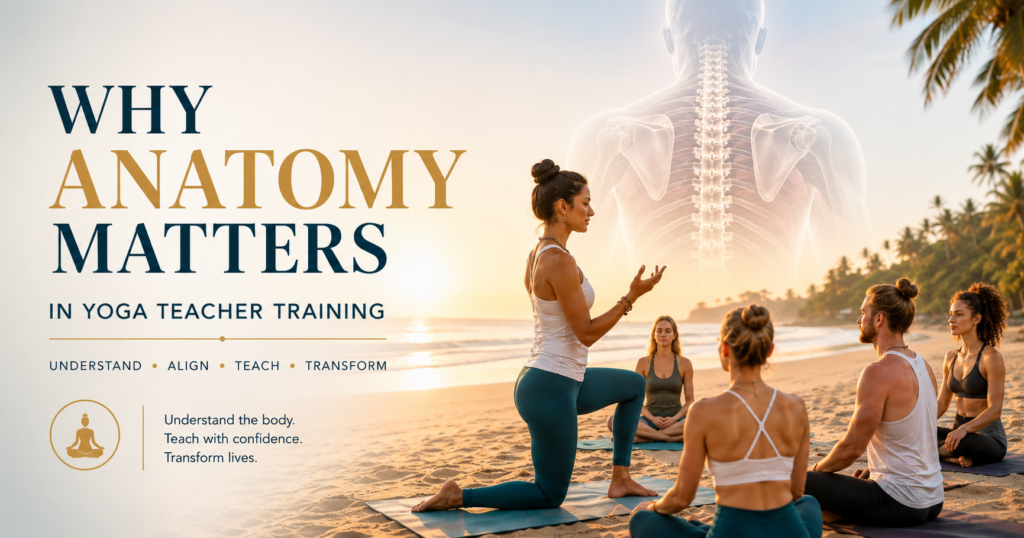
Yoga teacher explaining human anatomy and body alignment to students during a yoga teacher training session on the beach
Uncategorized

Why Anatomy Matters in Yoga Teacher Training

Many people join yoga teacher training because they love yoga classes, movement, and the peaceful feeling yoga brings. But once training begins, one topic often surprises students: anatomy.At first, anatomy can sound intimidating.Words like “hamstrings,” “rotator cuff,” or “joint stability” may feel more like a medical lecture than a yoga class. Some students even wonder:“Do I really need anatomy to teach yoga?”The short answer is yes — absolutely.You do not need to become a doctor or memorize every muscle in the body. But understanding basic anatomy is one of the most important parts of becoming a safe and confident yoga teacher.Why?Because every student’s body is different.Some people are naturally flexible. Others are recovering from injuries. Some students sit at desks all day, while others may have knee pain, tight hips, or lower back discomfort. A yoga teacher who understands anatomy can guide students more safely and effectively.In many ways, anatomy is what transforms yoga teaching from simply copying poses into truly understanding movement.In this blog, we’ll explore why anatomy matters in yoga teacher training, how it improves teaching skills, and why body awareness is essential for every future yoga teacher. What Is Anatomy in Yoga? Anatomy is the study of the body — including muscles, bones, joints, movement, posture, and how different parts of the body work together.In yoga teacher training, anatomy helps you understand: How the body moves Which muscles are being used in a pose How alignment affects safety Why certain students struggle with certain postures How to prevent injuries during practice Yoga anatomy is not about making yoga overly technical.Instead, it helps teachers explain poses in a smarter and safer way.For example:A student may not be able to touch their toes in Forward Fold. Without anatomy knowledge, a teacher might assume the student simply needs more flexibility.But anatomy teaches us there could be many reasons: Tight hamstrings Limited hip mobility Lower back sensitivity Different bone structure This understanding creates more compassionate and intelligent teaching. Why Anatomy Matters in Yoga Teacher Training 1. Anatomy Helps Keep Students Safe Safety is one of the biggest responsibilities of a yoga teacher.Students trust teachers to guide them properly. Without understanding anatomy, it becomes easy to unintentionally encourage unsafe movement patterns.For example:A beginner student may push too deeply into a backbend because they think “deeper is better.” But without proper muscle engagement and spinal awareness, this can create strain instead of benefit.A teacher trained in anatomy can recognize: Unsafe alignment Joint compression Overstretching Poor posture habits They can then offer safer adjustments or modifications.This is especially important in modern yoga classes, where students often arrive with: Sedentary lifestyles Stress-related tension Old injuries Knee pain Neck stiffness Lower back discomfort Teaching safely is not about making students fearful. It’s about helping them move intelligently.Understanding Alignment Through AnatomyAlignment is one of the most discussed topics in yoga teacher training.But true alignment is not about making every pose look perfect.It is about understanding how the body functions best.Good Alignment Creates StabilityWhen alignment is supportive: Muscles work efficiently Joints experience less strain Breathing improves Balance becomes easier Movement feels lighter For example, in Warrior II, proper knee alignment helps protect the knee joint and improves stability through the legs. Without anatomical awareness, students may unknowingly place stress on sensitive areas. 2. Anatomy Builds Body Awareness One of the greatest gifts of yoga is awareness.Anatomy deepens that awareness.During yoga teacher training, students begin noticing: Which muscles activate in different poses Where they hold tension How breathing affects movement Which habits create discomfort This process helps future teachers develop a stronger connection with their own bodies before guiding others.For example:A trainee may realize they always lock their knees in standing poses or collapse into the lower back during backbends.These small observations can completely change how they practice and teach.Yoga Is Not One-Size-Fits-AllOne of the most important lessons anatomy teaches is this:Every body is different.Two students may look completely different in the same pose — and both can still be practicing correctly.Lorem ipsum dolor sit amet, consectetur adipiscing elit. Ut elit tellus, luctus nec ullamcorper mattis, pulvinar dapibus leo.Factors that affect movement include: Bone structure Muscle length Flexibility Previous injuries Strength levels Mobility patterns This understanding helps yoga teachers stop forcing “perfect shapes.”Instead, they begin teaching according to function and comfort.That creates a more inclusive and supportive yoga environment. 3. Anatomy Helps Teachers Give Better Instructions Clear cueing is an important teaching skill.Anatomy helps teachers explain movement in ways students can actually understand and feel.Instead of saying:“Just stretch deeper.”A teacher with anatomy knowledge may say: “Engage your core to support the lower back.” “Press evenly through both feet.” “Relax unnecessary tension in the shoulders.” These cues are more specific, helpful, and safer.Students also gain more confidence when instructions feel clear and purposeful. Understanding Common Injury Areas in YogaCertain body areas are more vulnerable in yoga practice.These commonly include: Knees Lower back Wrists Neck Shoulders Hamstrings A yoga teacher trained in anatomy learns how to protect these areas during practice. For example:Lower Back SafetyMany students experience lower back discomfort in backbends or forward folds.Anatomy education helps teachers understand: Pelvic positioning Core engagement Spinal movement Hip mobility This allows teachers to guide poses more safely.Shoulder AwarenessShoulders are highly mobile joints, which also makes them vulnerable.In poses like Plank or Chaturanga, improper shoulder positioning can create strain over time.Understanding anatomy helps teachers teach strength and stability, not just flexibility. 4. Anatomy Improves Hands-On Adjustments Many yoga teacher training courses include adjustment techniques.Without anatomical understanding, physical adjustments can become risky.A safe adjustment should: Respect joint limits Avoid forcing movement Support stability Improve awareness Good teachers understand that not every body should move deeper into a pose.Sometimes the safest adjustment is simply verbal guidance or no adjustment at all.Anatomy Helps Teachers Work With Different StudentsA yoga class may include students of many ages and backgrounds.For example: Athletes Office workers Seniors Beginners Pregnant students Students recovering from injuries Each body has different needs.Anatomy gives teachers the tools to adapt yoga safely for different populations.This
Meditation pose illustrating the 8 Limbs of Yoga philosophy including mindfulness, self-discipline, concentration, and spiritual growth
Uncategorized

What Are the 8 Limbs of Yoga? A Beginner-Friendly Guide

Yoga is often seen as stretching, flexibility, and difficult poses on a mat. But if you’ve ever finished a yoga class feeling calmer, lighter, or more connected to yourself, you’ve already experienced something deeper than exercise. The truth is, yoga was never meant to be only physical. The ancient yogis created a complete system for living with balance, peace, and awareness. This system is known as the 8 Limbs of Yoga — a practical guide that helps us improve not just the body, but also the mind and emotions. For beginners, yoga philosophy can sometimes feel confusing or too spiritual. Words like Samadhi or Pratyahara may sound unfamiliar. But once you understand them in simple language, the 8 limbs become surprisingly relatable to modern life. Think about it: Feeling stressed because of constant notifications Struggling to focus Feeling emotionally drained Looking for more peace and clarity The 8 Limbs of Yoga were designed to help with exactly these kinds of challenges. In this guide, we’ll explore each limb in a simple and beginner-friendly way, along with practical examples you can apply in everyday life. Understanding the 8 Limbs of Yoga The concept of the 8 Limbs of Yoga comes from the Yoga Sutras of Patanjali, written by the sage Patanjali thousands of years ago. In Sanskrit, “Ashtanga” means: Ashta = Eight Anga = Limbs or branches These eight limbs work together like steps on a path. They are not strict rules. Instead, they help guide us toward a healthier and more meaningful life. Let’s understand each limb one by one. 1. Yama – How We Treat Others The first limb focuses on ethics and relationships. Imagine you start your morning with anger, gossip, or dishonesty. Even if you meditate later, your mind may still feel disturbed. That’s why yoga begins with how we behave toward others. The five Yamas are: Ahimsa – Non-Violence Ahimsa means avoiding harm through actions, words, and thoughts. This doesn’t only mean physical violence. It also includes: Speaking kindly Avoiding harsh self-criticism Being compassionate For example, many people are harder on themselves than anyone else. Practicing Ahimsa can simply mean replacing “I’m not good enough” with kinder self-talk. Satya – Truthfulness Satya means honesty. This includes being truthful with others and also with yourself. Example:If you constantly ignore stress and pretend everything is fine, you disconnect from your real feelings. Satya encourages authenticity. Asteya – Non-Stealing Asteya means not taking what isn’t yours. This can include: Time Credit Energy Ideas Even arriving very late repeatedly can be seen as stealing someone’s time. Brahmacharya – Balance of Energy Traditionally, this referred to celibacy. Today, it’s commonly understood as using your energy wisely. Instead of exhausting yourself through overwork, distractions, or unhealthy habits, Brahmacharya teaches moderation. Aparigraha – Non-Attachment Aparigraha means letting go of greed and over-attachment. Modern life constantly encourages “more”: More shopping More comparison More validation This limb reminds us that peace doesn’t come from collecting more things. 2. Niyama – How We Care for Ourselves If Yama is about the outer world, Niyama is about your inner world. These practices help build self-awareness and discipline. Saucha – Cleanliness Saucha means purity and cleanliness. This includes: Keeping your surroundings clean Eating nourishing food Clearing mental clutter A clean environment often creates a calmer mind. Santosha – Contentment Santosha means being grateful for what you already have. This doesn’t mean giving up ambition. It simply means learning not to depend completely on external achievements for happiness. A person with Santosha can enjoy growth without constant dissatisfaction. Tapas – Discipline Tapas is the inner fire that keeps you committed. For example: Waking up early for practice Staying consistent with meditation Building healthy habits Real transformation usually comes through small daily efforts. Svadhyaya – Self-Study This means observing yourself honestly. You begin noticing: Your reactions Your habits Your emotional patterns Journaling, reading spiritual texts, or reflecting after meditation are all forms of self-study. Ishvara Pranidhana – Surrender This limb teaches trust. Sometimes we try to control everything in life and become exhausted. Ishvara Pranidhana reminds us to do our best while accepting that not everything is in our hands. 3. Asana – The Physical Practice of Yoga This is the limb most people know today. Asana refers to yoga postures designed to prepare the body for meditation and long periods of sitting. Popular yoga poses include: Today, yoga classes often focus heavily on flexibility and fitness. But traditionally, Asana was only one part of the yogic path. The real goal was to create: Stability Comfort Body awareness Mental focus A simple yoga session can teach patience, balance, and mindfulness far beyond the mat. 4. Pranayama – The Power of Breath 5. Pratyahara – Turning Inward means withdrawal of senses We live in a world full of distractions: Social media Notifications Noise Endless scrolling Pratyahara means withdrawing attention from constant external stimulation. Think of it as giving your mind a break. There are four types practices in Pratyahara are as follows: Yognidra Ajapa Japa Antar Mouna Tratka Simple examples include: Sitting quietly without your phone Spending time in nature Closing your eyes during meditation Reducing screen time before sleep This limb helps create mental clarity and emotional balance. 6. Dharana – Focus and Concentration Dharana means intensity of concentration of mind This sounds simple, but in reality, many of us struggle to stay focused for even a few minutes. In yoga practice, concentration may involve: Dharna Included three types of practices. 1. External Dharana A. Bhoochari Mudra B. Aakasi Mudra 2. Intermediate Dharana A. Chidakas Dharana B. Hridyakas Dharana C. Dahrakas Dharana D. Viyom Panchak Dharana 3. Internal Dharana A. Blue Light B. Naad Internal Sound C. Shushumna Darshan Dharana strengthens mental discipline. It’s similar to training a muscle — the more you practice focus, the stronger it becomes. 7. Dhyana – Meditation When concentration becomes steady and continuous, it turns into meditation. This is Dhyana. Instead of forcing focus, awareness begins to flow naturally deeper & deeper. Many

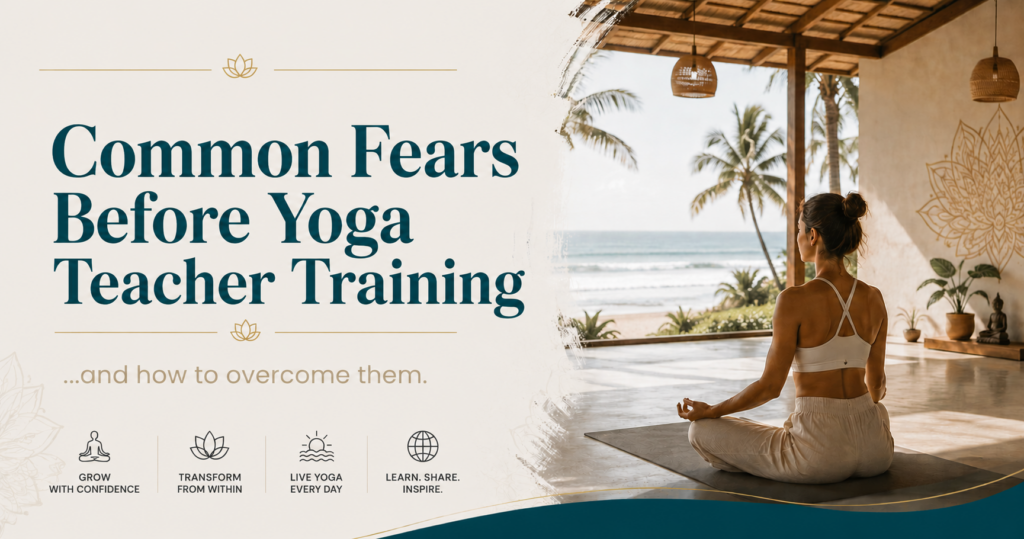
Common fears before joining yoga teacher training
Uncategorized

Common Fears Before Yoga Teacher Training and How to Overcome Them

Introduction You’ve been thinking about joining a Yoga Teacher Training course… but something is holding you back. Maybe it’s that voice in your head saying, “I’m not flexible enough,” or “What if I can’t keep up?” Or maybe you’re wondering if you’re too old, too inexperienced, or simply not “ready.” If this sounds familiar, you’re not alone. At Nirvikalp Yoga Academy, we meet students from India and around the world who feel excited—but also nervous—before starting their journey. The truth is, fears before Yoga Teacher Training are completely normal. The good news? These fears are not obstacles—they’re stepping stones. In this blog, we’ll explore the most common fears before Yoga Teacher Training and show you simple, practical ways to overcome them so you can step onto the mat with confidence Why Do We Feel Fear Before Yoga Teacher Training? Before diving into specific fears, let’s understand why they happen. Starting Yoga Teacher Training is a big life step. It’s not just about learning poses—it’s about: Personal growth Self-discovery Stepping out of your comfort zone Meeting new people Challenging your body and mind Naturally, your brain reacts with uncertainty. Fear is simply your mind trying to protect you from the unknown. But growth always begins where comfort ends. Common Fears Before Yoga Teacher Training 1. “I’m Not Flexible Enough” This is the most common fear before Yoga Teacher Training. You might look at advanced yogis on Instagram and think:“I can’t even touch my toes. How can I become a teacher?” Reality Check: Flexibility is not a requirement—it’s a result of practice. Yoga is not about extreme poses. It’s about awareness, breath, and consistency. How to Overcome It: Start where you are—no comparison Focus on progress, not perfection Remember: even teachers were beginners once Practice basic stretches daily 👉 At Nirvikalp Yoga Academy, training is designed for all levels, including beginners. 2. “What If I’m Too Old (or Too Young)?” Age is another big concern. Some think: “I’m too old to start something new.” Others think: “I don’t have enough life experience to teach.” Reality Check: Yoga has no age limit. We’ve seen students: In their early 20s discovering purpose In their 50s starting a second career How to Overcome It: Shift focus from age to intention Understand that teaching yoga is about sharing, not proving Embrace your unique journey Your age is not a limitation—it’s your strength. 3.“I’m Not Confident Enough to Teach” Many students worry about standing in front of a class. Thoughts like: “What if I forget instructions?” “What if people judge me?” Reality Check: Confidence is built during training—not before it. Yoga Teacher Training includes: Teaching practice (practicum) Group sessions Supportive feedback How to Overcome It: Start by teaching small groups or friends Practice speaking slowly and clearly Accept mistakes as part of learning Remember: Even the best teachers were once nervous beginners. 4. “I Don’t Know Enough About Yoga” You might feel like you need years of experience before joining. Reality Check: That’s exactly why Yoga Teacher Training exists—to teach you everything from the ground up. You will learn: Asanas (postures) Pranayama (breathing techniques) Meditation Anatomy Philosophy How to Overcome It: Let go of the “I should already know this” mindset Come with curiosity, not pressure Be open to learning step by step No one expects you to be an expert on Day 1. 5. “What If I Can’t Keep Up Physically?” Yoga Teacher Training can seem intense. Long hours, daily practice—it can feel overwhelming. Reality Check: Courses are designed with gradual progression. You’re not expected to be perfect—you’re expected to show up. How to Overcome It: Listen to your body Take rest when needed Focus on consistency, not intensity Yoga is not about pushing—it’s about balancing effort and ease. 6. “Will I Fit In?” Joining a new environment can feel intimidating, especially if you’re traveling or meeting people from different cultures. Reality Check: Yoga communities are among the most welcoming spaces. At Nirvikalp Yoga Academy: Students come from diverse backgrounds Everyone shares a common goal—growth How to Overcome It: Be open to conversations Remember: others feel the same way too Focus on connection, not comparison You’ll likely leave with lifelong friendships. 7.“What If I Fail?” Fear of failure can stop you before you even begin. Reality Check: Yoga Teacher Training is not about passing or failing—it’s about transformation. How to Overcome It: Redefine success as learning, not perfection Celebrate small wins Trust the process Growth is never linear—and that’s okay. How Yoga Teacher Training Actually Builds Confidence Once you begin, something surprising happens. The fears you had start fading. Here’s what changes during training: You Build Discipline Daily practice creates structure and consistency. You Understand Your Body You stop judging your body and start listening to it. You Learn to Express Yourself Teaching practice improves communication and clarity. You Gain Emotional Strength Meditation and philosophy bring inner stability. A Real-Life Perspective Many students join Nirvikalp Yoga Academy feeling unsure. In the first week: They hesitate They doubt themselves By the final week: They teach confidently They move with ease They smile more What changed? Not their flexibility.Not their age. Their mindset. Simple Tips to Prepare Before You Join FAQ Section 1. Do I need to be flexible before joining Yoga Teacher Training? No. Flexibility is developed during the training. Beginners are absolutely welcome. 2. What is the ideal age for Yoga Teacher Training? There is no ideal age. People of all age groups successfully complete the course. 3. Can I join Yoga Teacher Training with no prior experience? Yes. Most courses are designed for beginners and start from the basics. 4. How physically demanding is Yoga Teacher Training? It can be challenging, but it’s manageable. You are encouraged to go at your own pace. 5. Will I really be able to teach after completing the course? Yes. With proper guidance, teaching practice, and support, you will gain the confidence to teach. Conclusion Fear is not a sign to stop—it’s a sign that something meaningful is

Yoga Alliance certification explained for yoga teachers
Uncategorized

What Is Yoga Alliance Certification and Why Does It Matter for Your Yoga Career?

Introduction: A Small Certificate That Can Change Your Yoga Career Imagine this. You’ve just completed your yoga teacher training. You feel confident, inspired, and ready to teach. But when you start applying for teaching jobs—whether in India or abroad—you keep hearing one question: “Are you Yoga Alliance certified?” And suddenly, you pause. You did complete a course… but does it count globally? This is exactly where Yoga Alliance certification becomes important. For many aspiring yoga teachers, this certification is not just a badge—it’s a gateway to global opportunities, credibility, and professional growth. If you’re serious about building a career in yoga, understanding Yoga Alliance certification is essential. Let’s break it down in simple terms. What Is Yoga Alliance Certification? Yoga Alliance is a globally recognized, non-profit organization that sets standards for yoga teacher training programs. When a yoga school is registered with Yoga Alliance, it means: The curriculum meets international teaching standards The training hours are structured and verified The school follows ethical teaching practices And when you complete your course from such a school, you can register as a certified yoga teacher. Why Does Yoga Alliance Certification Matter? Let’s be honest—yoga is no longer just a personal practice. It’s a global profession. And like any profession, credibility matters. 1. Global Recognition One of the biggest advantages of Yoga Alliance certification is that it is recognized worldwide. Whether you want to teach in: India Europe USA Bali Australia &many others countries This certification acts like a universal language of trust. Without it, many studios may hesitate to hire you. 2. Builds Trust With Students Think from a student’s perspective. If they see two teachers: One with certification One without Who would they trust more? Certification shows that: You’ve completed proper training You understand anatomy, alignment, and safety You follow professional standards It reassures students that they are in safe hands. 3. Better Career Opportunities Many yoga studios, wellness centers, hospitals,Hotels,resorts and retreats require Yoga Alliance certification. With it, you can: Apply for international teaching jobs Conduct workshops and retreats Teach online with credibility Collaborate with wellness brands Without it, your opportunities may become limited. 4. Structured Learning (Not Just Random Practice) A Yoga Alliance-certified course is not just about learning poses. It includes: Yoga philosophy Anatomy and physiology Teaching methodology Alignment and adjustments Meditation and Pratyahara Asna, Pranayama, Mudra, Bandha Sat Kriya (Cleansing Practices) This structured approach transforms you from a practitioner into a professional teacher. 5. Professional Identity When you register as an RYT (Registered Yoga Teacher), you become part of a global community. This means: You can list yourself as a certified teacher You gain professional recognition You can network with other teachers worldwide It gives your career a serious and professional identity. Is Yoga Alliance Certification Mandatory? Here’s the truth. No, it’s not legally mandatory. You can teach yoga without it. But… Without Certification: Limited job opportunities Less trust from students Difficulty teaching internationally With Certification: More credibility Higher earning potential Global career flexibility So while it’s not required by law, it is highly recommended for career growth. How to Get Yoga Alliance Certification? Why Choose a Certified Yoga School in India? India is the birthplace of yoga, and learning here has its own magic. But not all schools are the same. At institutes like Nirvikalp Yoga Academy, the focus is not just certification—but transformation. What Makes a Good Yoga School? Experienced and qualified teachers Authentic yoga philosophy Small batch sizes for personal attention Practical teaching experience International certification standards Choosing the right academy ensures your certification holds real value. Real-Life Example: Why Certification Matters Let’s take a simple story. Riya and Alex both completed yoga training. Riya chose a Yoga Alliance-certified school Alex chose a cheaper, non-certified course After finishing: Riya got a job offer in Bali within 2 months Alex struggled to get interviews Why? Because studios trusted recognized certification. This happens more often than you think. Common Myths About Yoga Alliance Certification Myth 1: “It’s only for advanced teachers” Truth: Beginners start with 200-hour training. Myth 2: “It guarantees a job” Truth: It improves opportunities—but your skills still matter. Myth 3: “All yoga courses are the same” Truth: Certified programs follow structured, global standards. Myth 4: “It’s too expensive” Truth: Think of it as an investment in your career. Who Should Consider Yoga Alliance Certification? This certification is ideal for: Aspiring yoga teachers Fitness professionals Wellness coaches Travelers who want to teach abroad Anyone serious about yoga as a career Even if you don’t want to teach immediately, certification keeps doors open. Key Benefits at a Glance ✔ International recognition ✔ Higher credibility ✔ Better job opportunities ✔ Structured learning ✔ Professional identity ✔ Global mobility FAQ Section 1. What is Yoga Alliance certification in simple terms? It’s an internationally recognized standard that confirms you’ve completed a professional yoga teacher training program. 2. Is Yoga Alliance certification valid in India? Yes. While not mandatory, it is widely respected and adds strong credibility in India and abroad. 3. How long does it take to get certified? A 200-hour yoga teacher training usually takes: 3–4 weeks (intensive course) Or a few months (part-time) 4. Can I teach yoga without certification? Yes, but many studios prefer or require certified teachers. Certification improves your chances significantly. 5. Is Yoga Alliance certification worth it? If you’re serious about teaching yoga professionally, yes—it’s absolutely worth it. Conclusion: Is It the Right Step for You? If yoga is just a hobby, certification may not matter much. But if you: Want to teach professionally Dream of working internationally Want credibility and recognition Then Yoga Alliance certification is a smart and powerful step forward. It’s not just about a certificate. It’s about: Confidence Knowledge Opportunity And building a meaningful career Ready to Begin Your Journey? If you’re considering becoming a certified yoga teacher, choosing the right training institute is the most important decision. At Nirvikalp Yoga Academy, you’ll receive: Globally recognizedcertification Authentic yogic knowledge Hands-on teachingexperience Personal guidance fromexpert teachers Explore our

Beginner guide to yoga teacher training course
Uncategorized

What Is Yoga Teacher Training? A Beginner’s Complete Guide

Introduction You’ve probably seen people teaching yoga confidently—guiding classes, correcting postures, and creating a calm space for others. And maybe a thought crossed your mind: “Could I ever do that?” At the same time, you might feel confused. What exactly is Yoga Teacher Training (YTT)?Do you need to be flexible?Is it only for people who want to teach? If these questions are running in your mind, you’re not alone. Many beginners hesitate to explore Yoga Teacher Training because it sounds serious, technical, or even intimidating. The truth? It’s much simpler—and more life-changing—than you think. In this guide, we’ll break down what Yoga Teacher Training really is, who it’s for, and how it can transform not just your yoga practice, but your entire lifestyle. What Is Yoga Teacher Training? Yoga Teacher Training (YTT) is a structured course that teaches you the knowledge, skills, and confidence to understand yoga deeply—and, if you choose, teach it to others. Think of it like learning a language. Practicing yoga = speaking a few sentences Yoga Teacher Training = understanding grammar, meaning, and fluency During YTT, you don’t just learn poses—you learn the why behind them. In simple terms, YTT includes: Learning yoga postures (asanas) properly Understanding breathing techniques (pranayama) Practicing mudra, bandha, Psychic relaxation technique – Yoganidra,Antarmouna,AjapaJapa,Trataka Studying yoga philosophy Learning how to teach and guide others Building discipline and self-awareness It’s not just a course—it’s a journey of personal growth. Why Do People Join Yoga Teacher Training? Here’s something surprising:Not everyone who joins YTT wants to become a yoga teacher. Many people join for personal reasons. Common reasons include: To deepen their yoga practice To improve physical and mental health To reduce stress and anxiety To build a disciplined routine To explore a spiritual path To switch careers or start teaching yoga A simple example Emma, a working professional, joined YTT because of back pain and stress. She had no plans to teach. But during the course, she discovered confidence, clarity, and a passion for helping others. Today, she teaches part-time and feels more balanced than ever. That’s the beauty of Yoga Teacher Training—it gives you more than what you expect. Types of Yoga Teacher Training Programs When you start exploring YTT, you’ll come across different types of programs. Don’t worry—it’s not as complicated as it looks. 1. 200-Hour Yoga Teacher Training This is the most popular beginner-level course. Ideal for beginners Covers all basic concepts Internationally recognized US Alliance certification 👉 If you’re new, this is where you should start. 2. 300-Hour Yoga Teacher Training This is an advanced-level course. Requires completion of 200-hour YTT Deepens your knowledge Helps refine teaching skills 3. 500-Hour Yoga Teacher Training This is a combination of 200 + 300 hours. For serious practitioners More intensive and detailed 4. Specialized Yoga Courses Some programs focus on specific areas: Prenatal yoga Kids yoga Meditation training Therapy-based yoga What Will You Learn in Yoga Teacher Training? Let’s break this down in the simplest way possible. 1. Yoga Asanas (Postures) You’ll learn: Correct alignment Safe practice Modifications for different body types 2. Pranayama (Breathing Techniques) Breathing is the heart of yoga. You’ll learn how to: Control breath Improve energy levels Calm the mind 3. Yoga Philosophy This is where yoga becomes more than exercise. You’ll explore: Ancient yogic texts Concepts like mindfulness and balance The deeper purpose of yoga 4. Anatomy & Physiology Don’t worry—it’s beginner-friendly. You’ll understand: How the body moves Muscle engagement Injury prevention 5. Teaching Methodology This is the most practical part. You’ll learn how to: Structure a yoga class Give clear instructions Build confidence as a teacher Do You Need to Be Flexible to Join YTT? Short answer: No. This is one of the biggest myths. Yoga Teacher Training is not about being perfect—it’s about learning and growing. Think of it this way: You don’t go to school because you already know everything—you go to learn. The same applies here. What Happens During a Typical Day in YTT? Let’s imagine a simple day during your training. Meditation and breathing Yoga practice Theory classes (philosophy, anatomy) Teaching practice Relaxation or self-study It’s structured—but also calming and balanced. Benefits of Yoga Teacher Training Yoga Teacher Training is not just about teaching—it transforms your life. Physical Benefits Improved flexibility and strength Better posture Increased energy Mental Benefits Reduced stress Better focus Emotional balance Personal Growth Confidence building Self-discipline Clear thinking Professional Opportunities Become a certified yoga teacher Start your own classes Work in wellness centres,5Star hotel, hospital & retreats Open your own yoga studio How to Choose the Right Yoga Teacher Training Program Choosing the right place is important—especially for beginners. Here’s what to look for: Certified and experienced teachers Structured curriculum Supportive learning environment Good student reviews Comfortable location At Nirvikalp Yoga Academy, India, the focus is on making learning simple, practical, and deeply transformative for beginners. Is Yoga Teacher Training Worth It? If you’re wondering whether YTT is worth your time and effort, here’s a simple answer: 👉 If you want growth—yes, absolutely. You may start with curiosity, but you’ll finish with: Confidence Clarity A stronger connection with yourself Common Mistakes Beginners Make Avoid these when starting your journey: Waiting to “become flexible” first Overthinking the course Choosing based only on price Comparing yourself to others Remember: Yoga is a personal journey, not a competition. FAQ Section 1. What is Yoga Teacher Training in simple words? Yoga Teacher Training is a course where you learn yoga deeply—postures, breathing, philosophy—and how to teach it to others. 2. Can beginners join Yoga Teacher Training? Yes, absolutely. Most 200-hour YTT programs are designed specifically for beginners. 3. How long does Yoga Teacher Training take? A 200-hour course usually takes: 3–4 weeks (intensive) Or a few months (part-time)   4. Do I have to become a teacher after YTT? No. You can join just for personal growth and deeper understanding. Teaching is optional. 5. Is Yoga Teacher Training difficult? It can be challenging at times, but it’s designed to help you

Scroll to Top